



Premium cigars
Christian Eiroa Partners with FIU Researchers to Advance Tobacco Production
Par La rédaction,
le 29 October 2026
The cigar manufacturer has signed an agreement with Florida International University (FIU) to develop new tobacco production methods. The goal is to improve yields and quality while reducing costs. Initial experiments are scheduled to begin in 2027.
Tobacco production methods have not evolved as quickly as they should have. With this in mind, Christian Eiroa, owner of CLE Cigars, has signed an agreement with Florida International University (FIU) in Miami to launch a research program called the CLE Research Lab, as part of the Eiroa Innovation Fund.
Officially announced on October 8, the partnership aims to improve yields and leaf quality while reducing the investment required and the use of natural resources. “We hope to develop processes that can lower the barriers to entry for many lower-income areas in the U.S. and other parts of the world,” explains Christian Eiroa.
A Tobacco Curing Barn in a Shipping Container
The first concrete project focuses on leaf curing. Researchers plan to convert a 40-foot (approximately 12-meter) shipping container into a tobacco curing facility, equipped with temperature and humidity controls, ventilation, and racks for hanging tobacco leaves. “Our main objective is to develop an accessible, modular tobacco drying and curing system,” Daphne Sugino, one of the researchers involved in the project, tells L’Amateur de Cigare.
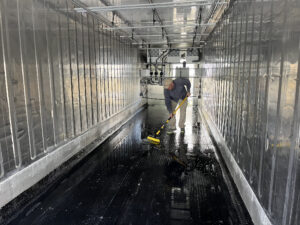
Jordan Prats prepares a shipping container.
The idea is to offer an alternative to traditional tobacco curing barns, which require substantial investment and space to build. Easily transportable and replicable using widely available equipment, the system could shorten curing times without compromising tobacco quality.
Researchers will examine how temperature and humidity conditions affect the color, chemical composition, and quality of the leaves.
Experimental Tobacco Cultivation in Florida
The second part of the program focuses on growing premium cigar tobacco in South Florida. Outdoor experimental plantings are scheduled to begin in January 2027 at Lion Farms, an agricultural operation owned by Peter Fedele.
Researchers aim to identify the most favorable planting periods, pests that could affect the crops, and limitations associated with local environmental conditions. “We want to understand how local growing conditions affect plant performance and leaf quality,” Daphne Sugino explains.
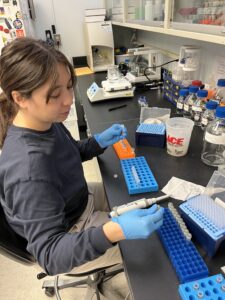
Daphne Sugino in her research laboratory.
The project will be led by Jordan Prats, who has previously worked on controlled-environment growing systems for industrial hemp at FIU. Together with Daphne Sugino, he also runs Cultiva Miami, a company specializing in agricultural research and consulting services for farmers.
The collaboration originated during a visit by Christian Eiroa to Lion Farms, where he met the researchers and several FIU officials. Subsequent discussions led to the idea of combining their scientific experience with CLE’s expertise in premium cigar tobacco production.
The program is still in the planning stages. Initial observations are expected during 2027. Results from the curing experiments will depend on when the shipping container becomes operational and the first crops are harvested, while assessing the feasibility of growing tobacco in South Florida will require several planting cycles.
Laurent Mimouni
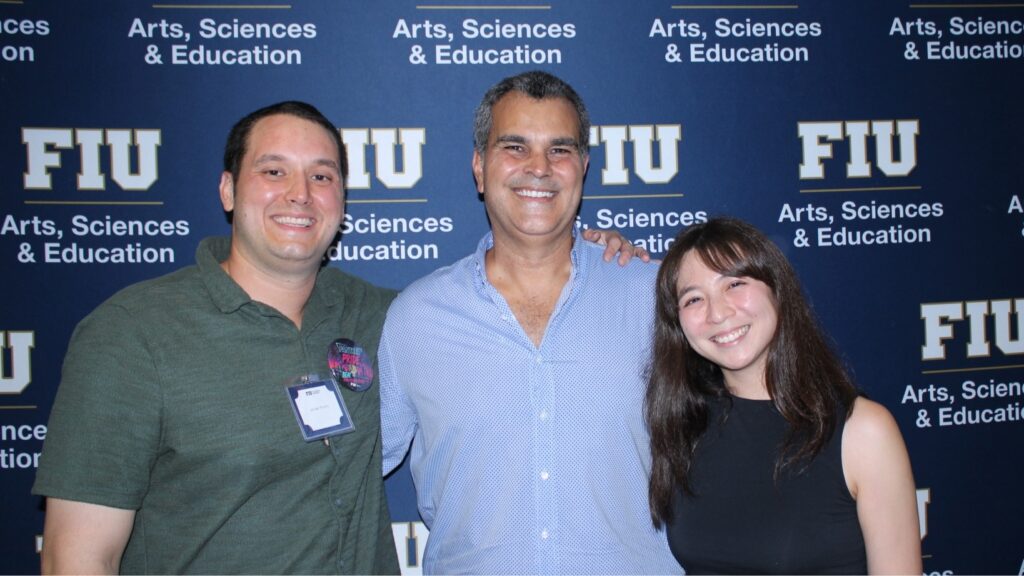
Opening photo: Christian Eiroa with FIU researchers Jordan Prats and Daphne Sugino. ©Samantha Perez
You might also like


Latest articles

29 October 2026
Christian Eiroa Partners with FIU Researchers to Advance Tobacco Production
27 October 2026
The Quai d’Orsay Concordia LE 2026 Unveiled In Madrid

27 October 2026
Belgium Postpones Smoking Lounges Ban Beyond January 2027
26 October 2026
New York And Las Vegas Now Have Their Own Davidoff

26 October 2026
Fifth Avenue Seeks “Alternative” Supply Arrangements for German La Casa del Habano Stores
Publicité
All the latest cigar news
Discover