



Premium cigars
Cuba Liberalizes Its Agriculture: A New Deal For Cuban cigars?
Par La rédaction,
le 24 June 2026
Three measures from the reform package adopted on June 19 directly concern the tobacco industry. We put them to two Cuban economists.
176 economic measures, no less. The reform package adopted on June 19 by the Cuban National Assembly is presented by the regime itself as the most significant turning point since Raúl Castro’s lineamientos in 2011. Among them, three directly concern the tobacco industry: measures 56, 57 and 58.
Usufruct And Fuel Imports
Measure 58 authorizes the granting of real usufruct rights over agricultural land to private legal entities — companies, joint ventures — for an indefinite period and based on a submitted project. Tobacco production is explicitly mentioned, with the stated goal of “encouraging agricultural production.”
Measures 56 and 57 allow economic actors to directly import fuel and renewable energy equipment, with tax incentives for those who invest in alternative energy sources.
The Real Legal Novelty
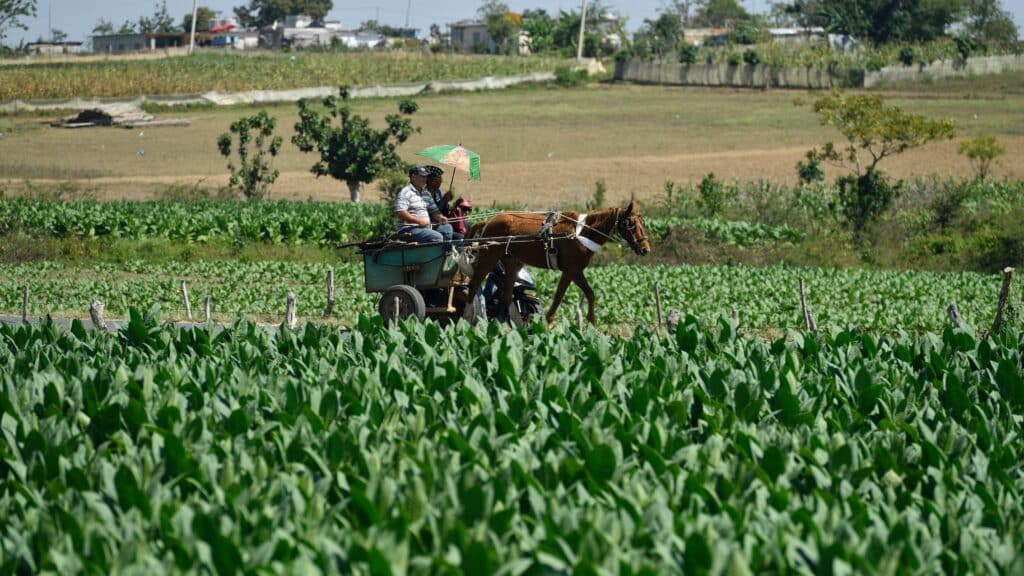
In the Vuelta Abajo, the region that accounts for at least two thirds of tobacco production destined for export habanos, the vast majority of tobacco lands already belong to small private owners whose families have farmed the same vegas for generations. This individual private ownership regime is not affected by these reforms.
What changes is something else. Since the creation of MiPymes — micro, small and medium-sized private enterprises — in 2021, the Cuban private sector has been able to invest in trade, services and manufacturing. But no legal framework allowed it to access land. Economist Daniel Torralbas, a specialist in Cuban economic reforms, sums it up: “For the first time, Cuban private companies will be able to hold usufruct rights over land. That is the major change” brought by the measures adopted on June 19.
And with the parallel announcement of the possible creation of large private companies, the door is theoretically open to new types of agricultural actors, including in the tobacco industry.
Energy: The Immediate Issue
For vegueros already in place, the impact of measures 56 and 57 will likely be more immediate. The 2025-2026 season ended with 11,426 hectares planted in Pinar del Río province — up from approximately 10,500 hectares the previous campaign, but well short of the initial target of 14,000 hectares, due in part to the consequences of the energy crisis. Half of the province’s tobacco surfaces are irrigated by electrified systems, directly affected by the national production shortfall.
Tabacuba had anticipated the problem by launching a transition programme toward photovoltaic energy — 213 systems installed during the previous campaign, 832 currently being installed, and 2,000 ordered for the 2026-2027 campaign (see L’Amateur English Edition #27). Measures 56 and 57 align with this shift by allowing economic actors to import such equipment directly, without going through the State. Omar Everleny Perez, a Cuban economist and member of the presidency’s advisory circle, sees a welcome coherence here: “Tobacco companies can now directly import their fuel and solar panels. It is an upgrading of the environment in which they operate.”
The Glass Ceiling: Tabacuba Keeps Control
Both economists agree on one structural limitation: Tabacuba’s monopoly remains intact.
The June 19 reforms modify the agricultural tier of the supply chain — who can grow, on what land, with what energy — but they do not touch the tier above: Tabacuba remains the sole buyer of all Cuban tobacco production, and Habanos S.A. retains the monopoly over marketing and export. A private MiPyme may tomorrow obtain land under usufruct to grow tobacco; it will still have to sell its harvest to Tabacuba, on terms set by the State.
This is precisely what Daniel Torralbas identifies as the central structural obstacle to any agricultural recovery: “The purchasing monopoly is one of the factors that holds back production and sustains the black market. What is needed is a decentralized, free marketing policy that serves as an incentive for private producers.” These reforms do not address that.
Reforms In Agriculture, Not A Reform Of Agriculture
The economist adds: “We are not facing a reform of Cuban agriculture, but reforms in Cuban agriculture” — in the plural. “These are positive measures, but they must be viewed with caution. For now, they are announcements. What matters most is what comes next: implementation.”
Laurent Mimouni
Photo: ©Luc Monnet
You might also like


Latest articles

23 September 2026
La Gloria Cubana Celebrates The 35th Anniversary Of La Casa del Habano Franchise Stores

22 September 2026
An El Rey Del Mundo “Costa Rica Exclusive” Is Arriving Next Week

22 September 2026
Elie Bleu Launches A Line Of Small Leather Goods

21 September 2026
“Smoke on the Water”: Trinidad Vigia Reserva Cosecha 2022 launched in Montreux

21 September 2026
“We Need the Cubans!”: At Dortmund, Schadenfreude Gives Way to Concern
Publicité
All the latest cigar news
Discover