



Premium cigars
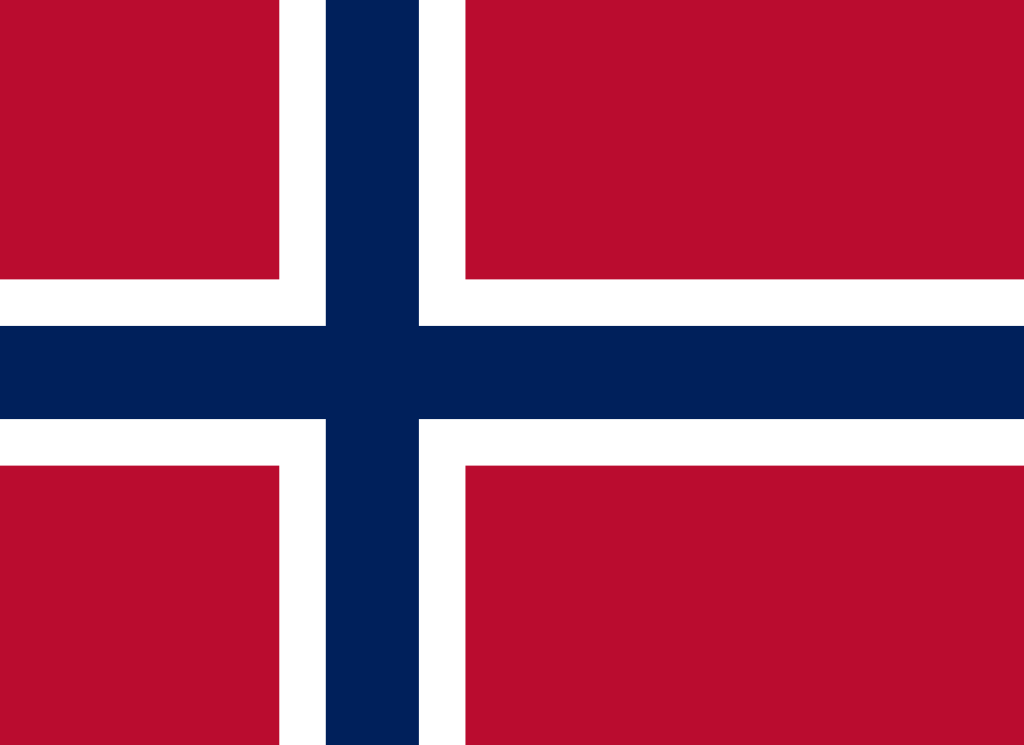
UPDATE – Facing Importers’ Pressure, Norway Freezes All Registration Fees
Par La rédaction,
le 13 October 2026
Facing an ultimatum from cigar importers, the Norwegian Ministry of Health has suspended the collection of registration fees.
Update (October 13, 2026) – The industry’s ultimatum has hit home. Confronted with the imminent threat of legal action before the Oslo District Court (Oslo tingrett) filed by the country’s leading importers (Augusto International, SOL Cigar Co., M. Sørensen, etc.), the Norwegian government has taken a decisive step back.
In an email reviewed by L’Amateur, Helena Wilson, Deputy Director at the Ministry of Health and Care Services (HOD), confirmed the immediate suspension of the disputed tax collection: “The Directorate of Health will not collect any fees until a final decision has been made by the Ministry in this matter,” wrote the government representative.
No registration fees (8,500 NOK / approx. €785) or annual maintenance fees (3,000 NOK / approx. €277) will be levied on cigar importers for the time being, pending the final political decision expected very shortly.
In official correspondence surrounding Proposition 97 L (2025–2026), the Ministry itself has acknowledged the unfair nature of the current system and is preparing to replace it with a comprehensive sectoral tax based on market share. Imposing millions of euros in flat-rate fees before the adoption of this new text proved legally untenable.
While the Ministry is conceding on the financial front, it is currently maintaining the technical registration deadline in the European EU-CEG database, citing binding agreements between the EU and EFTA.
Though the regulatory battle is far from over, this suspension of fee collection constitutes a major preliminary victory for the artisanal cigar industry, averting the short-term destruction of stock and the bankruptcy of independent importers.
—————————————————
Update (October 1, 2026) – The registration fee dispute in Norway has taken a judicial turn. As the Norwegian cigar industry finds itself strangled by the administrative demands of the EU-CEG registration system, independent importers are going on the offensive.
Norway’s major New World cigar importers (Augusto International, SOL Cigar Co., M. Sørensen AS, Tobakk Sørensen, and Nordic Cigars) formally submitted a request for a stay of execution and a notice of intent to sue to the Ministry of Health and Care Services (HOD) and the Directorate of Health (HDIR) on Wednesday, September 30.
Key takeaways from the filing:
-
Demand for an immediate stay of execution: The sector is calling for a temporary suspension of both registration fees and annual redevances while awaiting a parliamentary vote on new legislation.
-
Toward a fairer industry levy: The government itself acknowledged the injustice of the current framework by introducing a legislative proposal designed to replace flat-rate fees—which are devastating for niche products—with an industry levy proportional to market share.
-
Threat of legal proceedings in Oslo: Importers have given the Ministry a 14-day ultimatum. Should the authorities fail to suspend the fees, the signatories will petition the Oslo District Court for an injunction to halt fee collection.
According to our sources, companies that have already fulfilled their registration obligations have not yet been invoiced.
——————————————————-
Here is the original article published on our site on September 28:
Hundreds of thousands of cigars stuck in warehouses or, worse, destined for the flames of an incinerator. This is the absurd scenario facing Norwegian tobacconists and importers of handmade cigars. Misapplying the European EU-CEG (European Common Entry Gate) regulations, local health authorities are introducing a registration fee for every single stock keeping unit (SKU) starting October 1.
€785 per Vitola: An Impossible Equation
Revealed last March by the Norwegian Ministry of Health, the fees levied on each product reference (SKU) came as a heavy blow: an initial registration fee of 8,500 Norwegian kroner (approx. €785), accompanied by an annual maintenance fee of 3,000 kroner (approx. €277).
While these amounts can easily be absorbed by cigarette or snus giants—who move millions of packs across a handful of references—they are devastating for the handmade cigar world. A single blend is most often offered in several vitolas (Churchill, Robusto, Corona, etc.), yet each size constitutes a separate SKU in the eyes of the administration.
For Sol Cigar, an iconic Oslo merchant cited by the Norwegian financial daily E24, the total bill runs into hundreds of thousands of euros. Charging such sums for cigars imported in quantities of only a few dozen or hundred units per year makes no economic sense. Unable to pay these disproportionate fees, businesses will initially have to withdraw products from the market and, ultimately, destroy unregistered stock.
Beyond the financial burden, the industry is pointing out an intellectual absurdity. The EU-CEG system was designed, it argues, to monitor additives, flavorings, and chemicals added to cigarettes or e-liquids. However, a handmade cigar by definition contains only two ingredients: tobacco and water (bound with a touch of natural vegetable gum). Demanding exorbitant inspection fees to check the composition of a pure tobacco leaf demonstrates a fundamental misunderstanding of the sector.
The Estonian Precedent
Last May, the Supreme Court of Estonia ruled these EU-CEG registration fees completely unconstitutional. Brought before the court by industry professionals, the judges upheld three key arguments:
– Glaring disregard for the specificities of cigars (absence of additives);
– A lack of correlation between the taxes demanded and the actual costs incurred by health services to process a file;
– A violation of the principle of differentiation between industrial and artisanal tobacco products, which is nonetheless enshrined in the European directive.
“Due to their small-batch production and traditional manufacturing methods, cigars should not be subjected to regulatory measures designed for e-cigarettes and mass-market tobacco products,” notes Paul Varakas, General Manager of the European Cigar Manufacturers Association (ECMA). “The sector is not asking for special privileges—simply for its specific production, distribution, and consumption characteristics to be recognized through a proportionate regulatory framework.”
With the October 1 deadline fast approaching, the Norwegian industry hopes its government will listen to the voice of reason—or be brought back into line by the courts.
Laurent Mimouni
You might also like


Latest articles

13 October 2026
UPDATE – Facing Importers’ Pressure, Norway Freezes All Registration Fees

12 October 2026
Cuba’s 2026-27 tobacco season “will be difficult again”

9 October 2026
Germany Expected To Dodge Massive Cigar Tax Blow

8 October 2026
In London, the Talismán opens Cohiba’s 60th anniversary celebrations

5 October 2026
After Thirty Years, BAT Leaves Cuba Without A Word
Publicité
All the latest cigar news
Discover